Lagoon Algae and Weed Control
Algaecide, herbicide and biocatalyst products for wastewater lagoons, including duckweed and watermeal control that respects your discharge permit.
Short answer
Algae and duckweed in a treatment lagoon block sunlight and surface reaeration, drive dissolved oxygen down, and turn into BOD load when they die. Control means an algaecide or aquatic herbicide paired with a biocatalyst that breaks down the dead material before it settles into the sludge blanket.
What we carry
Argos Lagoon Algaecide
For: an algae bloom blocking light and surface reaeration
Copper-based algaecide for wastewater lagoons, controlling filamentous, planktonic and blue-green algae. Tank mixed with a biocatalyst to handle the dead biomass.
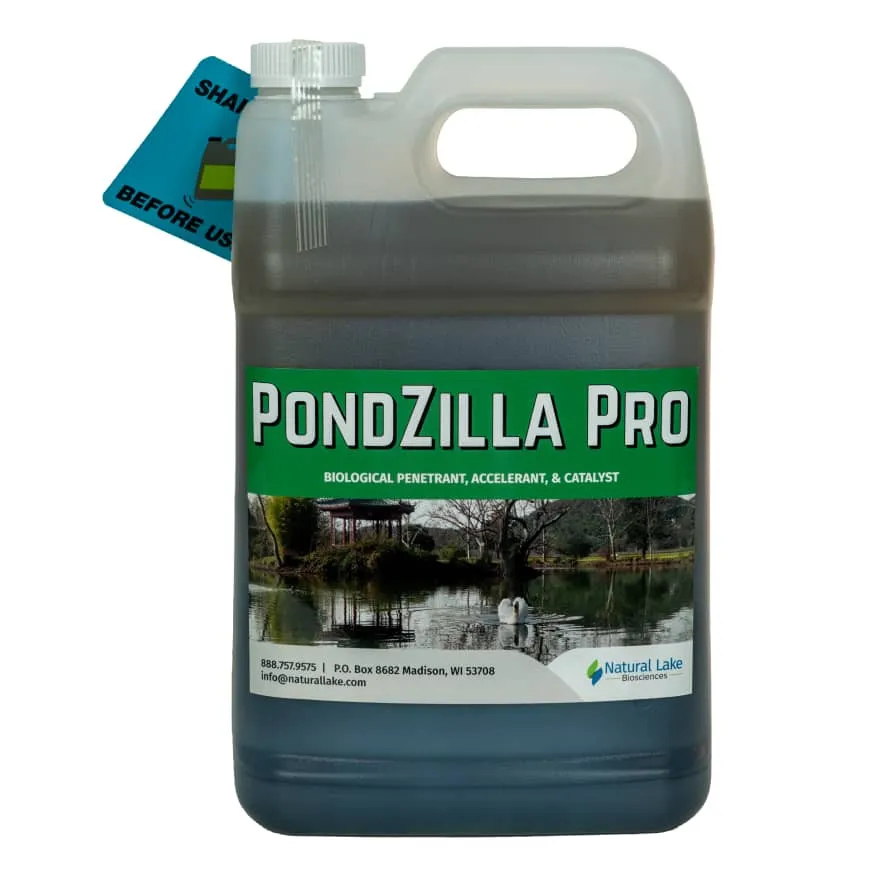
PondZilla Pro
For: an algaecide that is not working as well as it should
Enzyme-based biocatalyst that boosts algaecide and herbicide penetration in wastewater lagoons and degrades the dead plant material afterwards.
Duckweed Complete
For: a duckweed or watermeal blanket covering the cell
EPA-registered herbicide paired with a biocatalyst for duckweed and watermeal in wastewater lagoons. Case covers roughly five acres of surface treatment.
Which one for which problem
| Product | Reach for it when | Form | Applied from | Timeline |
|---|---|---|---|---|
| Argos Lagoon Algaecide | An algae bloom blocking light and surface reaeration | Liquid, tank mixed | Sprayed evenly over the target area | Days for die-off |
| PondZilla Pro | An algaecide that is not working as well as it should | Liquid biocatalyst | Tank mixed with the algaecide or herbicide | Applied with each treatment |
| Duckweed Complete | A duckweed or watermeal blanket covering the cell | Herbicide plus biocatalyst, supplied as a case | Sprayed over the surface, or subsurface | Days for die-off, weeks for breakdown |
Plenty of systems run more than one of these. They are complementary far more often than they are alternatives, and each product page says which it pairs with and why.
Almost everything written about algae and duckweed control is written for private ponds. A treatment lagoon is a different animal: it discharges under a permit, and every pound of vegetation you kill and leave in the water becomes oxygen demand your cells have to treat. The vegetation guide covers the permit and infrastructure traps in full.
The two-part rule
Treating vegetation in a lagoon is always two jobs, and catalogs usually sell you only the first.
Kill it. A copper-based algaecide handles filamentous, planktonic and blue-green algae. An aquatic-labelled herbicide handles duckweed and watermeal.
Then deal with the biomass. Dead algae and plant matter sink. In a private pond that is an aesthetic issue; in a treatment cell it becomes BOD and TSS inside your own treatment train, and it settles into the sludge blanket you are probably already managing. A biocatalyst applied with the kill accelerates that breakdown so the material degrades in the water column rather than banking on the bottom.
| Problem | Product | What it does |
|---|---|---|
| Filamentous, planktonic or blue-green algae | Argos Lagoon Algaecide | Copper-based algaecide, fast die-off |
| Duckweed and watermeal | Duckweed Complete | EPA-registered herbicide plus biocatalyst |
| Dead biomass after any treatment | PondZilla Pro | Biocatalyst, penetration and breakdown |
Treat in sections
A whole-surface kill on a loaded cell puts the entire decay load into your treatment train at once. Treat in sections sized to your cells’ oxygen budget, and schedule around discharge events. That single discipline prevents most of the self-inflicted permit trouble that follows a vegetation treatment.
And read the recurrence
If algae or duckweed keeps returning, it is a loading and mixing diagnostic rather than a housekeeping chore. Duckweed cannot establish on moving water, and a cell wearing a complete blanket has told you it is nutrient-heavy and under-mixed. The durable answer is usually aeration, with chemical control clearing what is already there.
Common questions
Why pair an algaecide with an adjuvant?
Two reasons. The adjuvant helps the algaecide penetrate the protective slime layer around algae cells, so the treatment actually works, and it accelerates breakdown of the dead material afterwards so it does not settle out and add to your sludge blanket. Killing algae without handling the biomass just moves the problem to the bottom of the cell.
Do I need a permit to apply these?
Often yes. Pesticide applications to waters, including treatment lagoons in many circumstances, can require coverage under your state's Pesticide General Permit, a licensed applicator, or both. Confirm with your state environmental agency before you spray anything. The product label is law and your state rules sit on top of it.
Will treating algae hurt my treatment biology?
The biocatalyst products are formulated not to harm beneficial bacteria. The larger risk is the decay load: a large kill releases organic material into a cell that then has to treat it. Treat in sections sized to your cells' oxygen budget rather than the whole surface at once.
Why does duckweed keep coming back?
Because it is a symptom. Duckweed thrives on nutrient-rich, still water, so a cell that keeps growing a blanket is telling you it is nutrient-heavy and under-mixed. Herbicide clears the current mat; aeration and loading control are what stop it returning.
Read before you buy
How to Get Rid of Cattails and Duckweed in a Wastewater Lagoon
How to remove cattails and duckweed from a wastewater lagoon the permit-safe way: mechanical, herbicide, and aeration options for treatment cells.
AerationWastewater Lagoon Aeration: The Operator's Complete Guide
How lagoon aeration works, surface vs diffused systems, sizing basics, winter operation, and how to choose the right aerator for your cells.
SludgeLagoon Sludge Removal: Costs, Options, and How to Decide
Dredging vs biological sludge reduction for wastewater lagoons: real cost ranges, how to measure your sludge blanket, and a decision framework.