PondZillaformulated by AquaFix
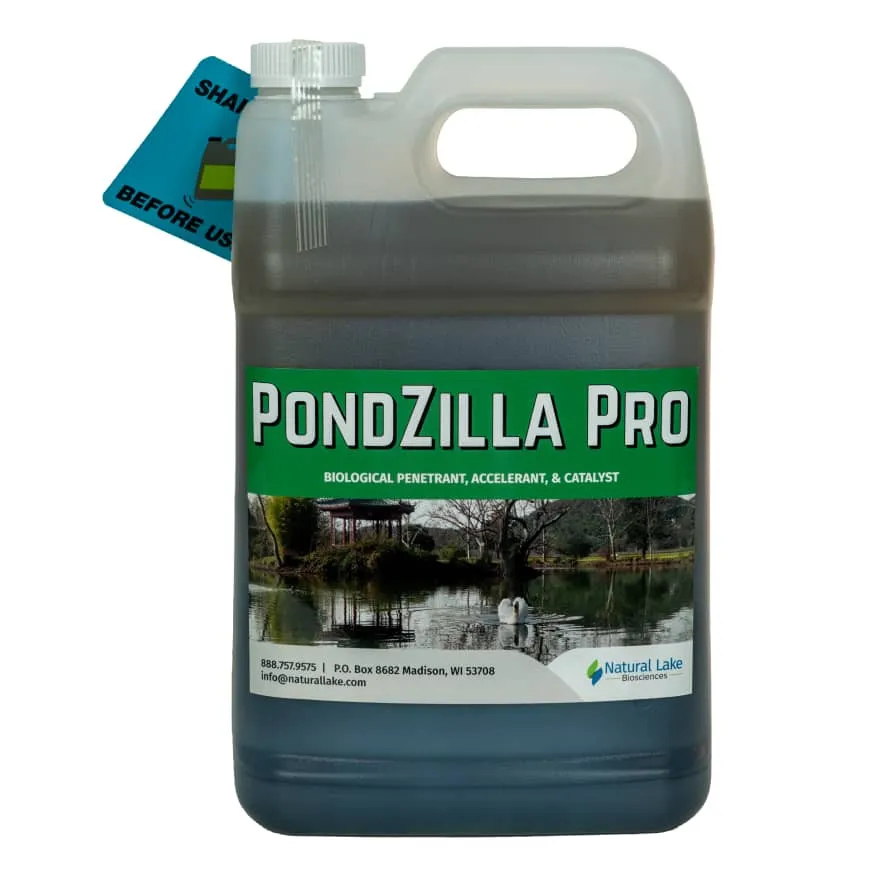
PondZilla Pro
Enzyme-based biocatalyst that boosts algaecide and herbicide penetration in wastewater lagoons and degrades the dead plant material afterwards.
What it is
PondZilla Pro is an enzyme-based biocatalyst that makes algaecides and aquatic herbicides work better and cleans up after them. It breaks down the slime layer shielding algae and plant cells so the treatment penetrates, then accelerates degradation of the dead biomass so it does not settle into the sludge blanket.
Buy this when you are seeing
- An algaecide that is not working as well as it should
- Sludge building after every vegetation treatment
- Floating scum and nutrient release after a kill
- Algae or duckweed regrowing quickly after treatment
How it works
Algae and aquatic plants protect themselves with extracellular polymeric substances, the slime layer that makes a mat feel slick. That layer is also what stops a copper algaecide or an aquatic herbicide reaching the cells it is meant to kill. This product targets the EPS specifically, which is why the same algaecide dose works harder alongside it.
The second job happens after the kill. Dead algae and plant matter sink, and in a treatment cell that becomes BOD and TSS inside your own train plus a contribution to the sludge blanket. The biocatalyst accelerates degradation of that material in the water column so less of it banks on the bottom.
It also breaks up floating scum and limits the nutrient release that follows a large die-off. That release is what commonly fuels the next bloom, which is the mechanism behind vegetation treatments that appear to need repeating on a shortening cycle.
Check these before you buy
These decide whether this product can work at all. If one fails, fix that first, because the money spent here will not survive it.
- Know which primary treatment you are pairing it withThis is an adjuvant, not a standalone treatment. It amplifies an algaecide or aquatic herbicide; on its own it has no target.
- Calculate acre-feetDosing scales with treated volume alongside the primary product, so surface acres multiplied by average depth is the working figure.
- Confirm your state's pesticide requirements for the primary productThe adjuvant rides along with a pesticide application, and the permit and applicator rules attach to that application.
Is this the right fit
Good fit for
- Every copper algaecide application in a lagoon
- Aquatic herbicide treatments for duckweed and weeds
- Limiting sludge gain after a vegetation treatment
- Tough blooms of filamentous algae and cyanobacteria
Not the answer for
- Use on its own as an algae treatment
- Reducing an existing sludge blanket, which needs a sludge product
- Replacing the nutrient control that stops regrowth
Dosing and application
- Moderate dose tank mix
- Per acre at 5 feet deep: 3 gal PondZilla Pro with 7.5 gal Argos in 100 gal water.
- Light dose tank mix
- Per acre at 5 feet deep: 1 gal PondZilla Pro with 3.5 gal Argos in 40 gal water.
- Acre-foot dosing
- Per acre-foot: 0.6 gal PondZilla Pro with 1.7 gal Argos in 17 gal water.
- With herbicide
- Paired with Flumigard for duckweed and watermeal, supplied together as Duckweed Complete.
- Pack options
- 5 gallon case of two 2.5 gallon jugs, or a 55 gallon drum. The drum ships by freight.
What to expect, and when
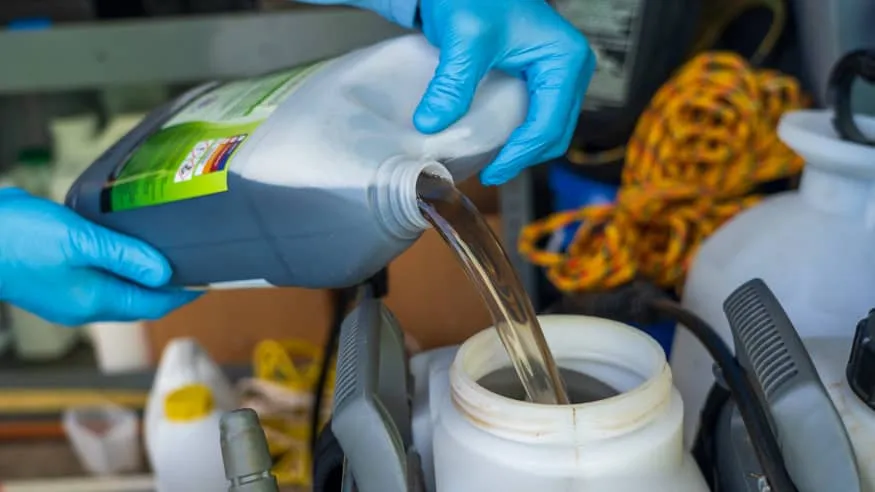
- At applicationTank mixed with the primary treatment and applied together. It is not a follow-up product.
- First daysBetter and more even kill than the algaecide alone typically achieves, particularly on mats with a heavy slime layer.
- Following weeksDead material degrades in the water column rather than accumulating. The measurable version of this is less blanket gain after treatment.
- Next bloomLonger interval before regrowth, because less nutrient was released by decaying biomass.
How you prove it worked
The honest comparison is against your own history: how much your blanket gained after previous vegetation treatments, and how long the interval was before regrowth. Both are things a system usually has records of even without a formal survey.
Most algaecide disappointment traces to one of two things: the treatment never reached the cells, or it worked and then the dead material became a different problem.
An enzyme biocatalyst addresses both. Algae and aquatic plants shield themselves behind a slime layer of extracellular polymeric substances; break that down and the same dose of copper reaches more cells. Then, after the kill, the same biology accelerates degradation of the dead material so it degrades in the column instead of settling into the blanket.
That second effect is why this belongs in a wastewater catalog rather than a pond one. In a decorative pond, dead algae on the bottom is out of sight. In a treatment lagoon it is BOD and TSS inside your own process, plus a nutrient release that commonly funds the next bloom.
Specifications
| Manufacturer | AquaFix |
|---|---|
| Type | Enzyme-based biocatalyst and adjuvant |
| Targets | Extracellular polymeric substances, the algal slime layer |
| Application | Tank mixed with an algaecide or aquatic herbicide |
| Dosing basis | Acre-feet, alongside the primary product |
| Pack sizes | 5 gallon case or 55 gallon drum |
Works alongside
Common questions
Can I use it on its own?
No. It is an adjuvant: it makes a copper algaecide or aquatic herbicide more effective and cleans up the biomass afterwards, but it has no target of its own. Used alone it does nothing useful for an algae problem.
Why does the dead algae matter so much?
Because in a treatment lagoon it does not go away, it relocates. Dead biomass settles into the sludge blanket, and it releases nutrients as it decays, which fuels the next bloom. Handling the dead material is how you keep a vegetation treatment from quietly becoming a sludge problem.
How much do I need per treatment?
0.6 gallons per acre-foot on the standard tank mix, so a three-acre cell at 5 feet deep, which is 15 acre-feet, needs about 9 gallons. A 5 gallon case covers roughly 8 acre-feet.
Does it harm treatment bacteria?
No. It stimulates biological activity rather than suppressing it, which is part of why it is used in permitted systems where a broad-spectrum biocide would be unacceptable.
Which pack size should I order?
The 5 gallon case suits single treatments on smaller cells and ships parcel. The 55 gallon drum suits multi-acre systems treating repeatedly through a season, and ships by freight, so it is quoted to your site.
Read before you buy
How to Get Rid of Cattails and Duckweed in a Wastewater Lagoon
How to remove cattails and duckweed from a wastewater lagoon the permit-safe way: mechanical, herbicide, and aeration options for treatment cells.
SludgeLagoon Sludge Removal: Costs, Options, and How to Decide
Dredging vs biological sludge reduction for wastewater lagoons: real cost ranges, how to measure your sludge blanket, and a decision framework.
AerationWastewater Lagoon Aeration: The Operator's Complete Guide
How lagoon aeration works, surface vs diffused systems, sizing basics, winter operation, and how to choose the right aerator for your cells.